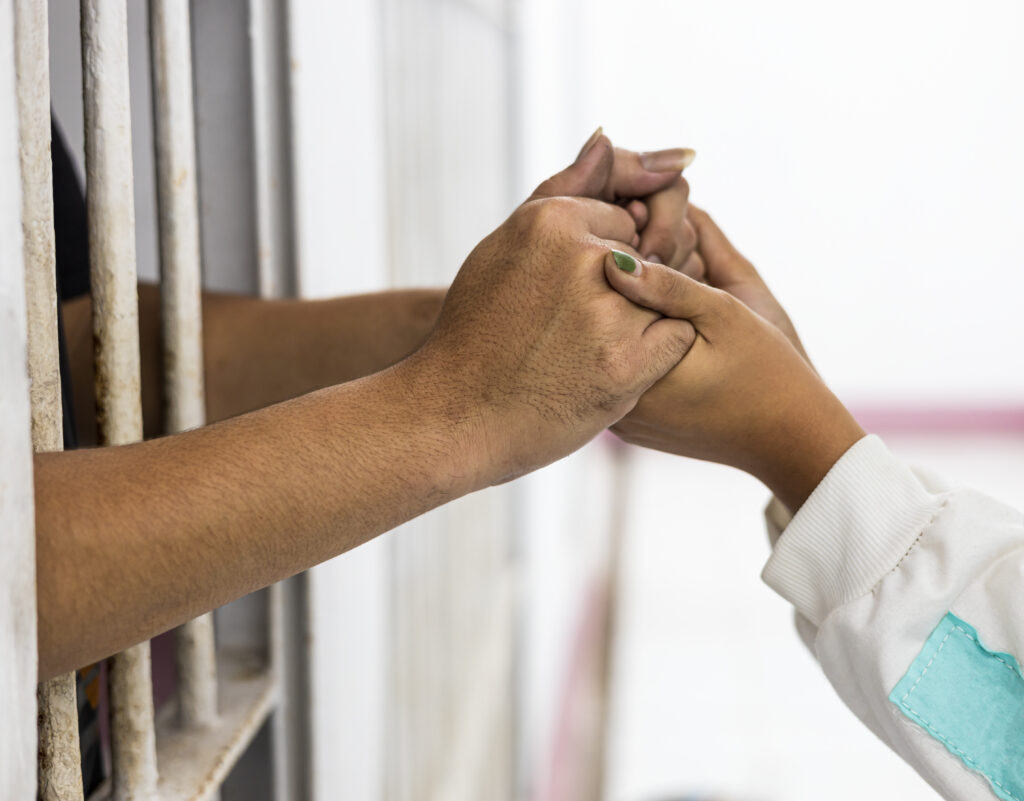
Why would someone plead “Guilty” if they’re innocent?
A falsely accused Oklahoma man accepted a lengthy prison sentence to protect his family from being falsely accused. There’s more to criminal law than meets the eye.
The idea that the law punishes the guilty and protects the innocent in ingrained in public perception. Courtroom dramas like to show us inspiring images of people defending what’s right in court, and ambitious investigators who are determined to find the truth and “catch the perp” by the end of each 30-minute episode. Programs like “Cops” show clips of people caught in the act (which is certainly the only reason people are ever arrested), and police dramas have hardworking officers waxing philosophical about the line between their call to duty and the limits of their power. True Crime dramas display the ugliest sides of the most heinous crimes committed by man. It all makes for great television, but the reality of the justice system is something just a little different. With the vast majority (over 90%) of cases ending in “plea deals,” many never even get their day in court.
This video was filmed the evening after the court date where the plea deal was finalized. After Eric and his wife made the hours-long drive to the county seat, they visited the lawyer’s office to hear the details. The lawyer’s usually-booming voice muttered over the lengthy text of the plea bargain as if it was the thousandth time he had read one, and struggled to remember the name of Eric’s son. He had to be reminded about one all-important condition of the deal– that if Eric agrees to this, the madness stops here.
His wife states in the recording:
This morning, my husband pled No Contest to a terrible crime he did not commit. It had been a four-year battle against lies, manipulation, stalking, harassment, twisting of the legal system, and threats against our lives that eventually ended in an impossible choice. It was either face death in prison from multiple life sentences, or take an offer he couldn’t refuse. The plea bargain specifies that nobody else can be accused as a result of this investigation. That means that his friends, his family, and the people who are around him are all safe, now, from being falsely accused the way he was.
Their lives were about to be changed forever, but in truth, they had already been changed. No matter how hard they fought, no matter how much evidence they had, the prosecution still held all the cards (and all the exculpatory evidence) that could be played to any effect. The case dragged for years, during which they were suspended in a precarious limbo where even the slightest error could be weaponized to revoke Bond.
Meanwhile, family, friends, and coworkers were threatened with prosecution. The grounds to do so would have been even shakier than the ones on which Eric himself was accused, but each one of those people would still be forced through the same process of incarceration, Bond (if even available), and public condemnation. The wheels had already been set in motion, and it was something only he could stop.
To him, it made sense. To me, it blows my mind that it had to go this far. After a lifetime of community service, several years of making Poteau and Leflore County a better place; a place that his sone and everybody’s sons and daughters could be proud to grow up in; a place that was in touch with its history. He gave so much of himself to encourage the members of the community to invest in each other; to support each other through the Salvation Army, the Neshoba Youth Foundation, and just giving locally to each other. I’m shocked that nobody involved stopped and said “Let’s take a second look at this. Eric wouldn’t do this. Let’s find out what really happened.” because if they had looked into it further, they would have found out what really happened. I guess it just doesn’t work that way.
In theory, it’s supposed to work that way. So many people put wholehearted trust in the justice system, believing that between today’s technology and our Constitutional rights it’s a given that the guilty will be punished, and the innocent have no cause for concern. After all, guilt is supposed to be proven “Beyond a reasonable doubt” before a jury of your peers.
How can they know, unless they’ve experienced it, that there is an instant disadvantage placed upon those who have to defend themselves? “Innocent until proven guilty” doesn’t make a difference when you’re sitting in county jail, fighting your third bout of untreated COVID-19, squinting to read names off an out-of-date list of public defenders because your expensive lawyer is pressuring you to just take the deal because “You’re going to die in prison” either way. Despite having their trust in the legal system betrayed by the harsh reality of a system stacked against the accused, Eric and his wife haven’t given up hope that things can change.
I don’t know what I’m going to do without him, and I don’t know where we’re going to go from here. There’s so much that happened, and so much that needs to be said. If I’m going to be the only one saying it, then so be it. The truth has to come out somehow, and I just hope that it’s not in vain. It may be too late to save Eric, but if our story helps somebody else, then it’s worth telling.